
State of Vegetarian and Vegan diets in Japan
Japan is by no means a “vegetarian friendly” country in a traditional sense of the phrase. One can’t just walk into any restaurant and expect vegetarian items on the menu! It is even likely that many aren’t aware of such a thing as vegetarianism, but there’s a wealth of plant-based culinary treasures waiting to be discovered for those willing to seek them out. Japan has a deep-rooted culinary tradition that uses flavorful plant-based ingredients from mushrooms and sea-weed to turnip and daikon! During our travel, we realized that food in Japan is a form of art, and a reflection of the country’s cultural identity. As such, there is a greater emphasis on creating vegetarian and vegan dishes that are not only healthy(ish) but also visually appealing and emotionally satisfying.
From bustling izakayas to tranquil teahouses, a diverse array of establishments cater to plant-based diets. Japanese cuisine offers a plethora of easily adaptable dishes, such as tempura, tofu-based dishes like agedashi tofu, and vegetable sushi rolls like kappa maki (cucumber roll) or avocado rolls. There is even Shojin-Ryori or Buddhist temple food that is inherently vegetarian and places emphasis on simplicity and balanced diet. But even beyond these, the Ramens, and the Okonomiyakis have also begun finding a place in a vegetarian tourists’ tummies because of the unprecedented growth in restaurants that have begun developing exclusive menus to cater to these dietary requirements. During our trip, we explored a variety of establishments and we decided to put down a semi-detailed description of everything we had, where we ate them and pictures (where ever we remembered to click before hogging our food!)
Ramen
Ramen is a Japanese noodles dish with a Chinese Origin. We had Ramen in 4 different places and each of them served up a different style of Ramen.
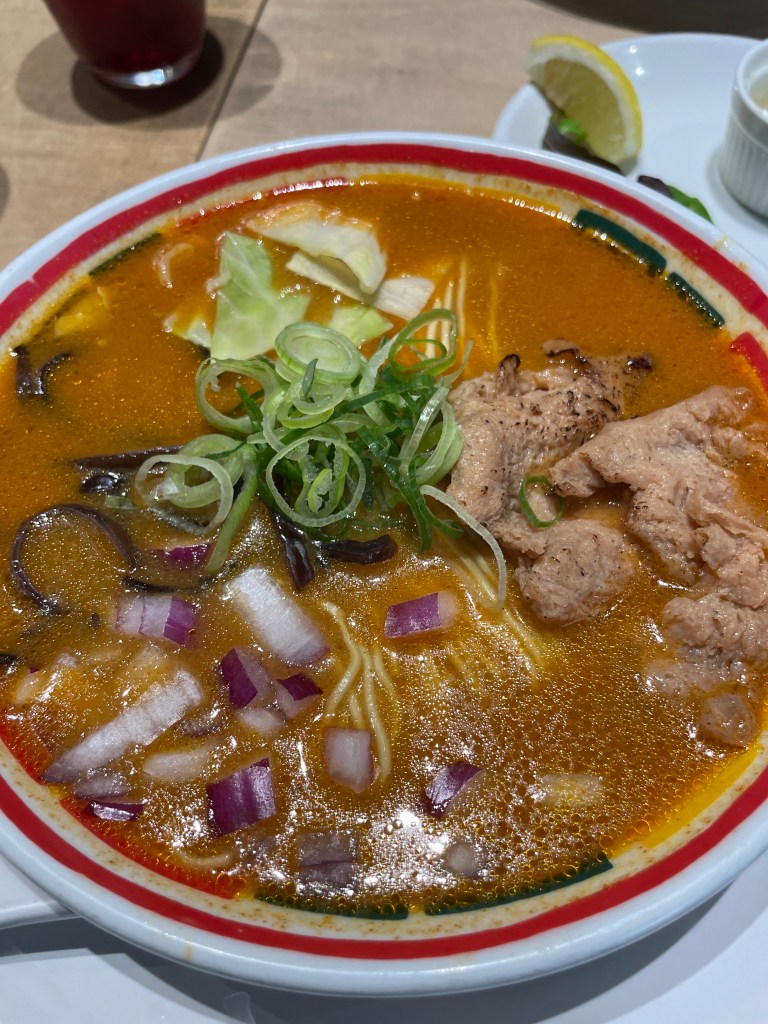
- Vegan Bistro Jangara: This was our first Ramen and we had it on our first day in Japan. This is a full-vegan kitchen belonging to the more popular Kyushu Jangara. The original Kyushu Jangara also seems to have vegan Ramen on their menu but at the fully vegan Bistro Jangara, there are more options to choose from. We had the Vegan Karabon and the Vegan Konboshan – both are Tonkotsu Ramen with a rich and flavorful broth. The karabon has a spicy broth and they do mean spicy in its true sense ! A delight for anyone that loves some heat !
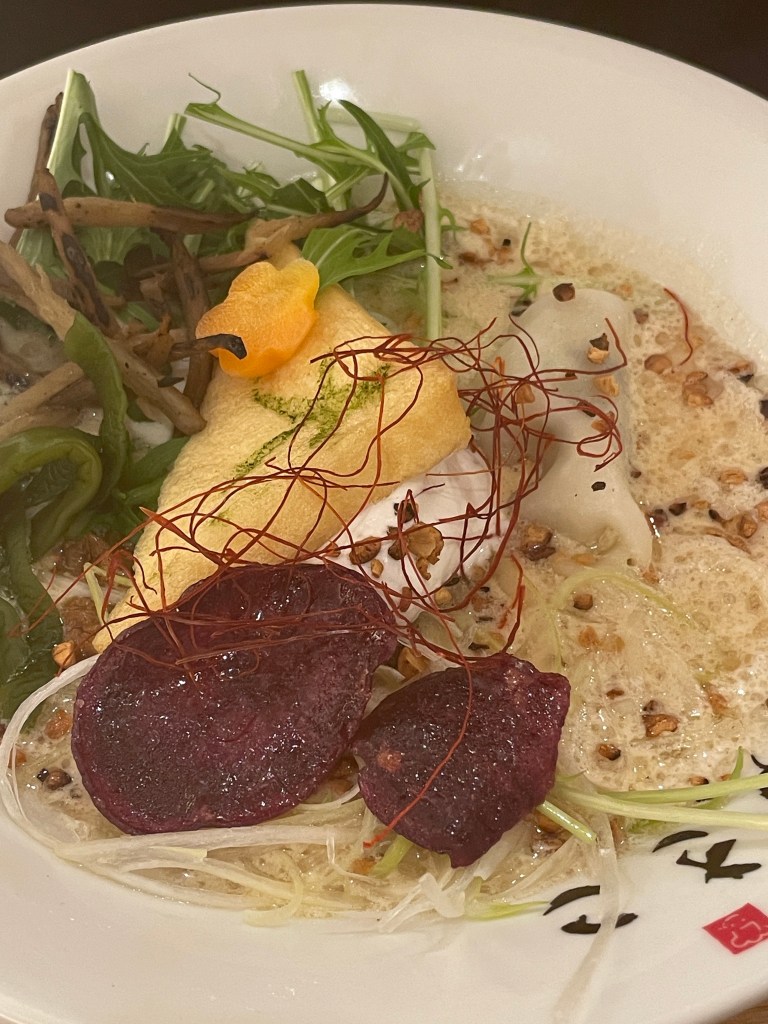
- T’s Tan Tan : The legendary vegan Ramen place in Tokyo – it has a couple of locations. We went here twice (because its super convenient and super good, a mighty combination! ), once to the Tokyo Station location and once to the Ueno Park station location. The Tokyo station one is harder to find. The best way to find it is to look for signs to the Keiyo line. The Ueno Park location is also within the JR gates! Here one can find a golden sesame TanTan Ramen (sichuan influenced Ramen) with additional creaminess coming from peanut butter!
- Tsukemmen Zuppa: This is a sort of a hidden gem in that it is not in a touristy location. It’s a one-man show at this restaurant – the owner cum chef speaks English very well and you can order your Ramen at the vending machine outside and print your ticket before going in. The vending machine is in Japanese, but Google Translate is your best friend in Japan! The place can accommodate around 6 people at most! The owner recommends first timers to try the soy milk Ramen which is absolutely delightful, but we would suggest the Tsukemmen Ramen instead – which is a style of Ramen where the broth (more like curry consistency) and Ramen are given separately!
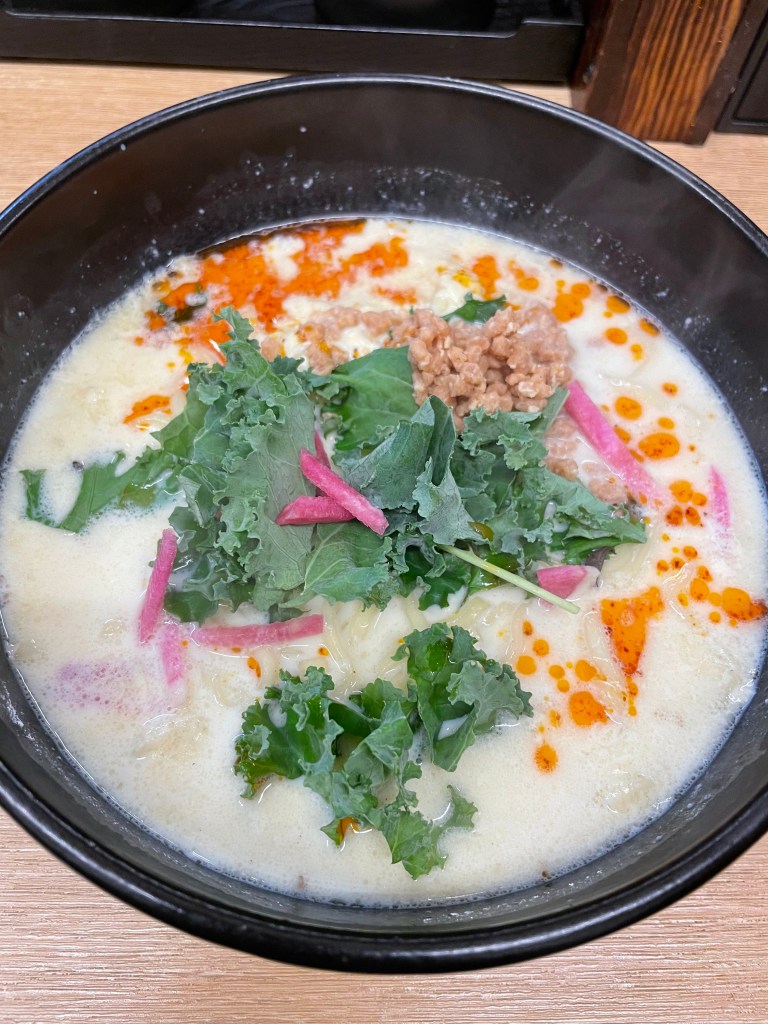
- Gion Soy Milk Ramen: Kyoto’s got its Ramen game sorted out too! The soy milk Ramen was abundant in flavor, and freshness! For the spice and heat loving folks, they have a Dan-Dan variant that kicks up the heat a couple of notches higher than the regular one.
We couldn’t really choose and honestly thought that all these were exceptional but hey! if everything is good, nothing is good! So, Nitin’s favorite is Gion Soy Milk Ramen and Sruthi’s pick is Vegan Bistro Jangara!
Udon and Soba Noodles
So Ramen obviously is a type of noodles but there’s also Udon and Soba noodles which are more Japanese than Ramen!
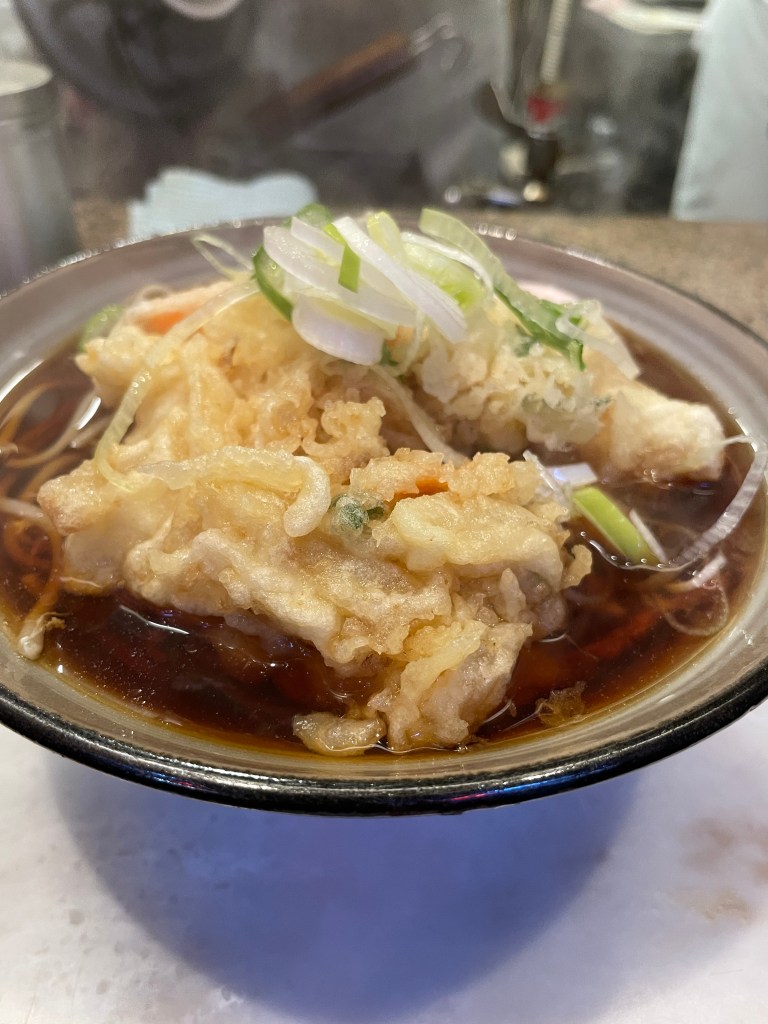
- Tempura and Soba at Kameya, Shinjuku: Kameya is a tiny establishment in “Omoide Yokocho” alley in Shinjuku. It has 6 seats and it is very common to see people in business attire eating soba at 6 am in the morning. This establishment is open 24 x 7. *Note* : We had noodles here knowing fully well that the broth is “NOT VEGETARIAN“. It has fish sauce and bonito flakes! And we were ok with that. Our verdict: Cheap and delicious! You would never know if you didn’t already know that there is fish sauce and bonito in the broth.
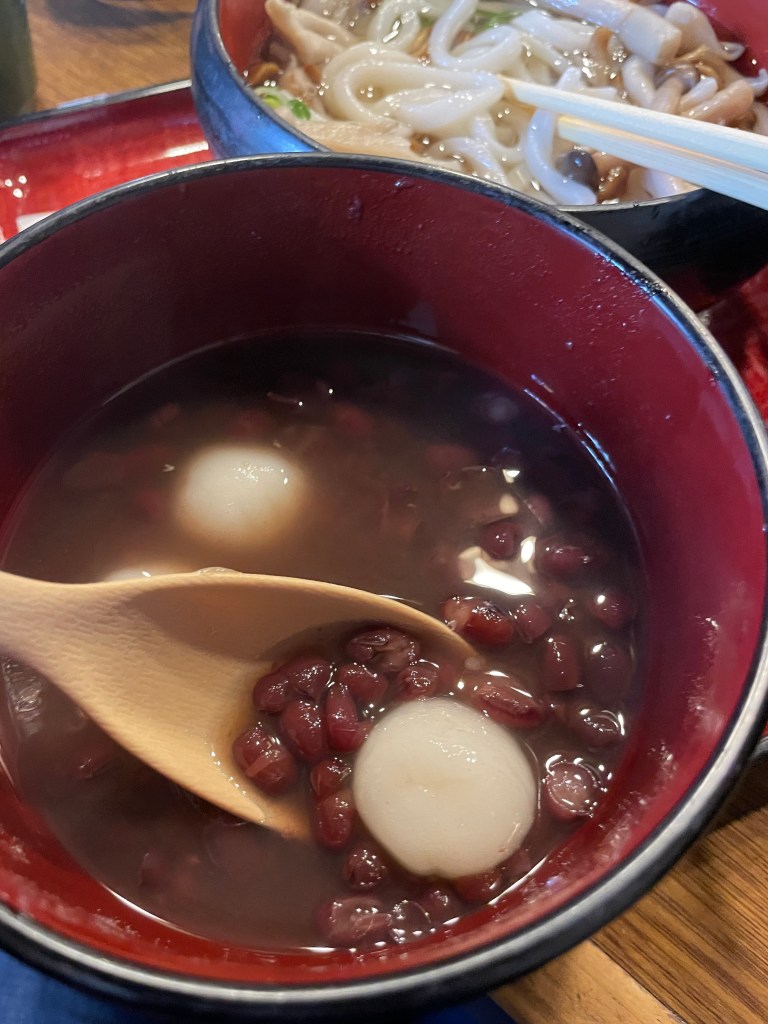
- Udon noodles at Mizuya chaya, Nara: This is a small teahouse, about 5-7 mins by walk from the Kasuga Taisha shrine in Nara. They have a separate vegetarian menu with a broth that is vegetarian. You cannot go wrong with any of their choices, we ate 2 bowls each! We tried the wild vegetables, tempura, mushroom and kitsune. Sruthi’s favorite was the mushroom and Nitin liked kitsune udon the most! The red bean and rice dumpling dessert was also exceptional! Very reasonably priced – one bowl of noodles should suffice for most people (unless you are starving from all the walking and end up here at 2 pm just before they close! ).
- Curry Udon at Mimikou – The best dish for any Indian’s palate! It has all the spices one could ask for and a rich and super flavorful broth that is on the thicker side! Because of the turmeric and spices that go into the broth, most establishments give a disposable apron to wear so you can slurp away without worrying about getting your clothes stained. A good topping to curry udon is usually Kitsune and/or tempura! Who can say no to crunchy deep-fried goodness !
As much as we loved all the dishes – we cannot let go of our Indian-ness and thus with all its flavor and spices – the curry Udon tops the noodle category for both of us!
Okonomiyaki
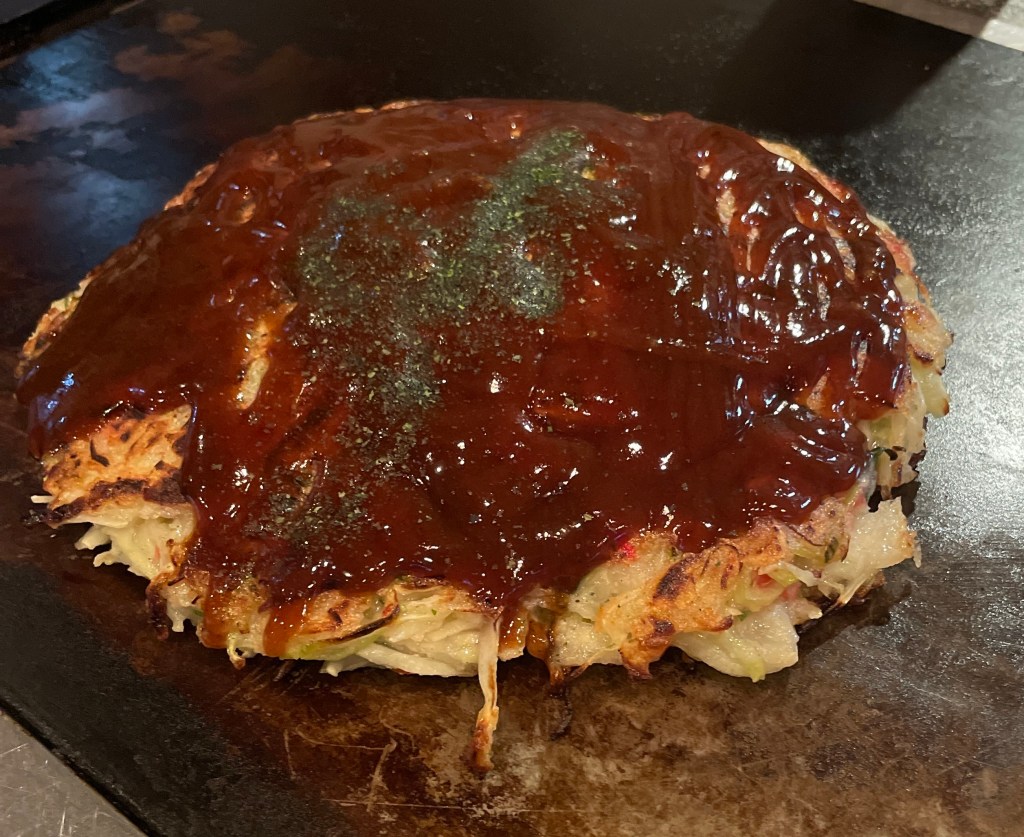
There are two popular types of okonomiyaki (a savory grilled pancake) – Osaka style and Hiroshima style. We found out on our last day that there’s also something known as the Tokyo style ! But we don’t know what that is and we didn’t try it out.
- Jirokichi Hiroshima style okonomiyaki: The okonomiyaki is layered with a crepe, followed by cabbage, and then noodles and then toppings like scallions (spring onions), and then some sauce on top. Other topping can include, eggs, cheese etc.
- Osaka style okonomiyaki at Gion Tanto in Kyoto, and OKO fun Okonomiyaki bar in Osaka: All ingredients are mixed together in one batter and then grilled. We definitely liked this style more! Both these places are wildly popular and expect wait times of at least 30 mins and up to 2 hours. We ended up going to both these places for an early dinner (around 6 pm), and our wait time was ~ 30 mins. When we got out, we saw at least 30 people waiting outside !
Sushi
There is a tremendous appeal for something that is so simple and delicate as sushi. Sushi is of course a general term for anything that is served with vinegared sweet and sour rice. It can be nigiri, maki, temaki etc. While the mainstay of sushi is the fish or seafood that often accompanies the rice as a topping or filling, for vegetarians, there is definitely a unique appeal for vegetables whose tastes and flavors come alive when eaten in this form.
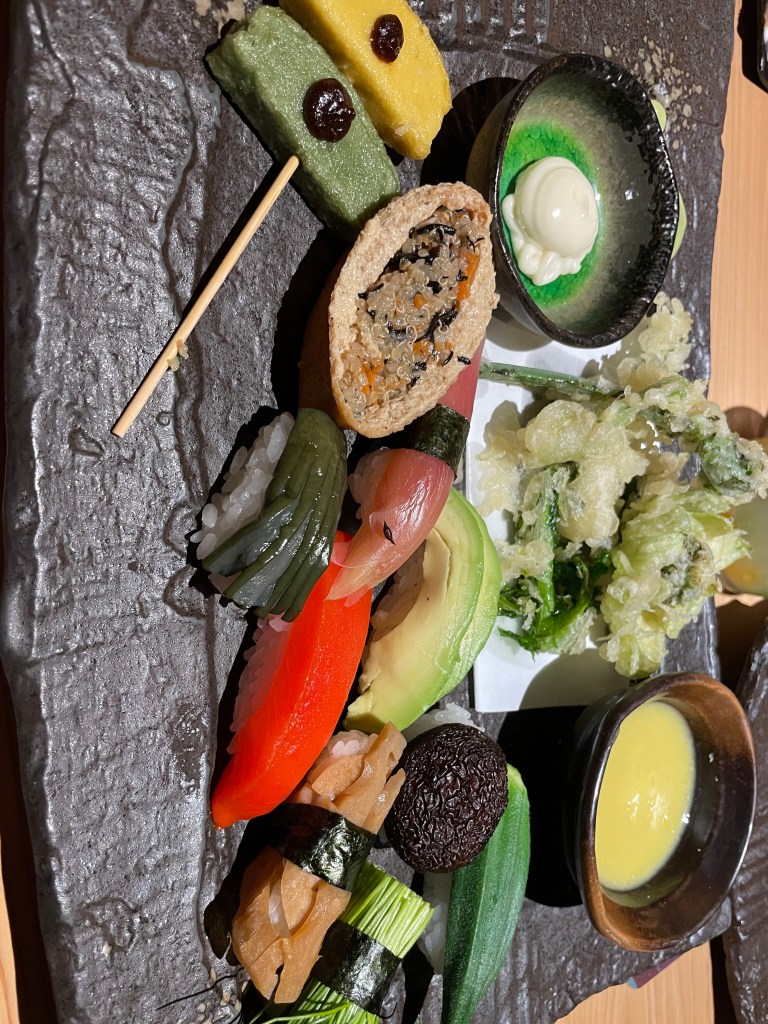
- Sushi Gonpachi : At sushi gonpachi, we had the nigiri variant, along with some tempura, and skewers. We had a platter so we could try many different things at once. It seemed like vegetables were chosen so as to mimic some form of sea-food. Sruthi was a little hesitant trying the okra sushi, half expecting to spit it out- but wow! it is possibly the best tasting single okra we might have eaten! Upscale-ish place that became popular due to Kill-Bill but for vegetarians, we’d say the place is definitely worth trying. We didn’t try the rolls since we eat them in the US all the time! Full marks for taste and creativity.
- AWOMB, Nishikiyamachi, Kyoto: This is yet another incredible place where everyone is given a plate full of toppings, and condiments along with rice and sea-weed sheets. Everyone gets to make hand-rolled sushi with whatever combinations of toppings and condiments they’d like. There is really no correct way to do this as every combination is as tasty as every other! We loved this place, for its totally eye-catchy presentation, the variety of ingredients and the ambience which was calm and soulful!
Both the sushi places were the most expensive restaurants we ate at in Japan!
Appetizers, Breakfast and Miscellaneous
We’ll mention a list of items and the places we ate them at:
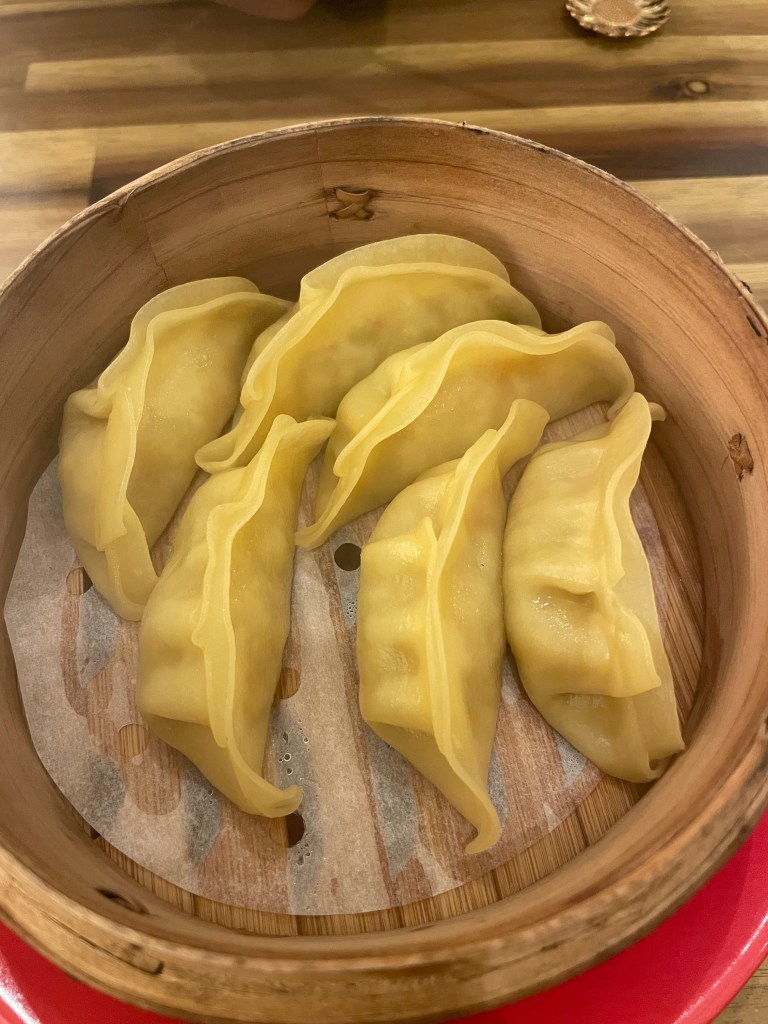
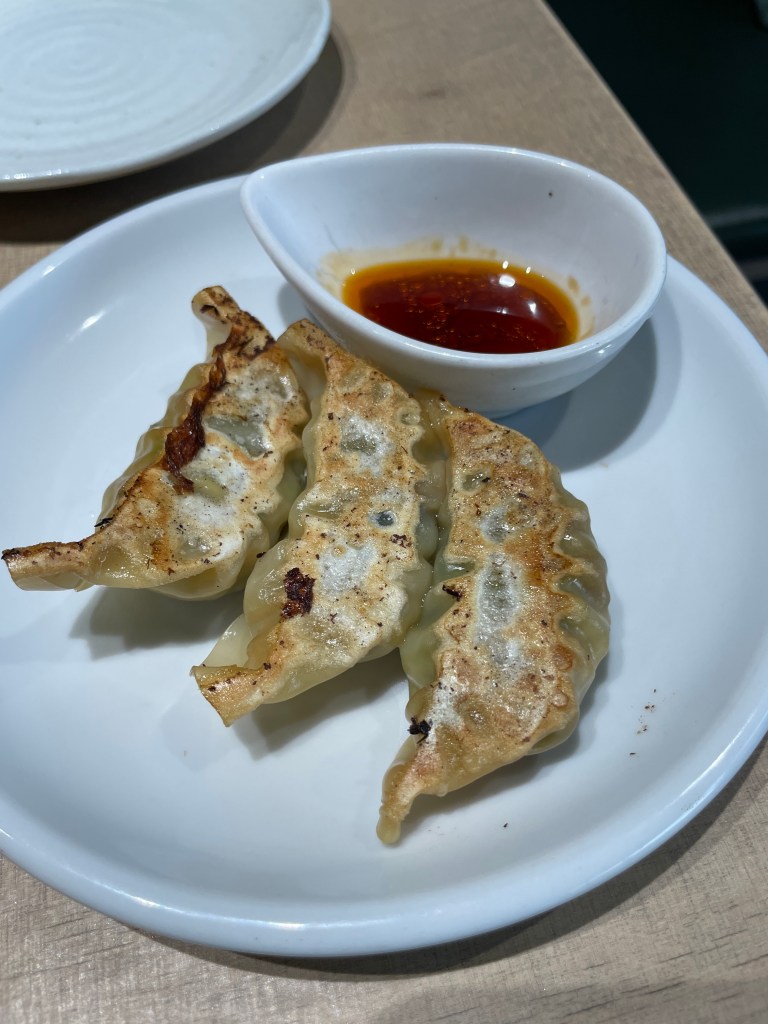
- Gyoza – very common appetizer, served in several restaurants as an appetizer or sometimes as a set/side with a Ramen/rice bowl.
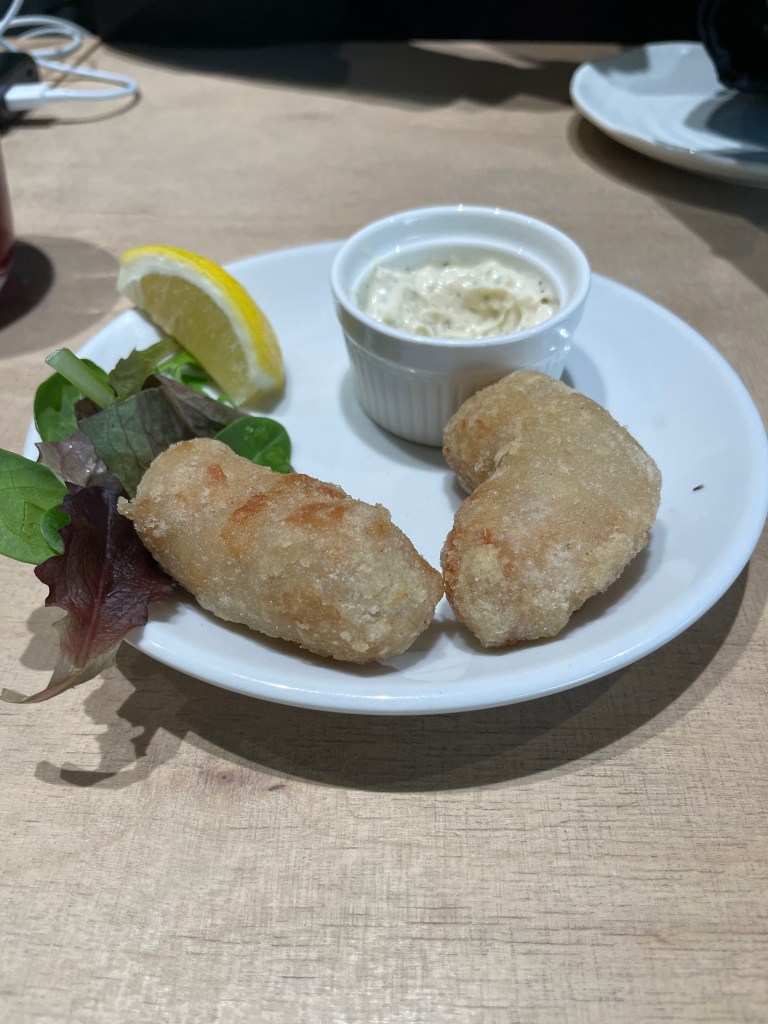
- Soy meat Karaage – Also pretty common, Karaage is like a fritter!
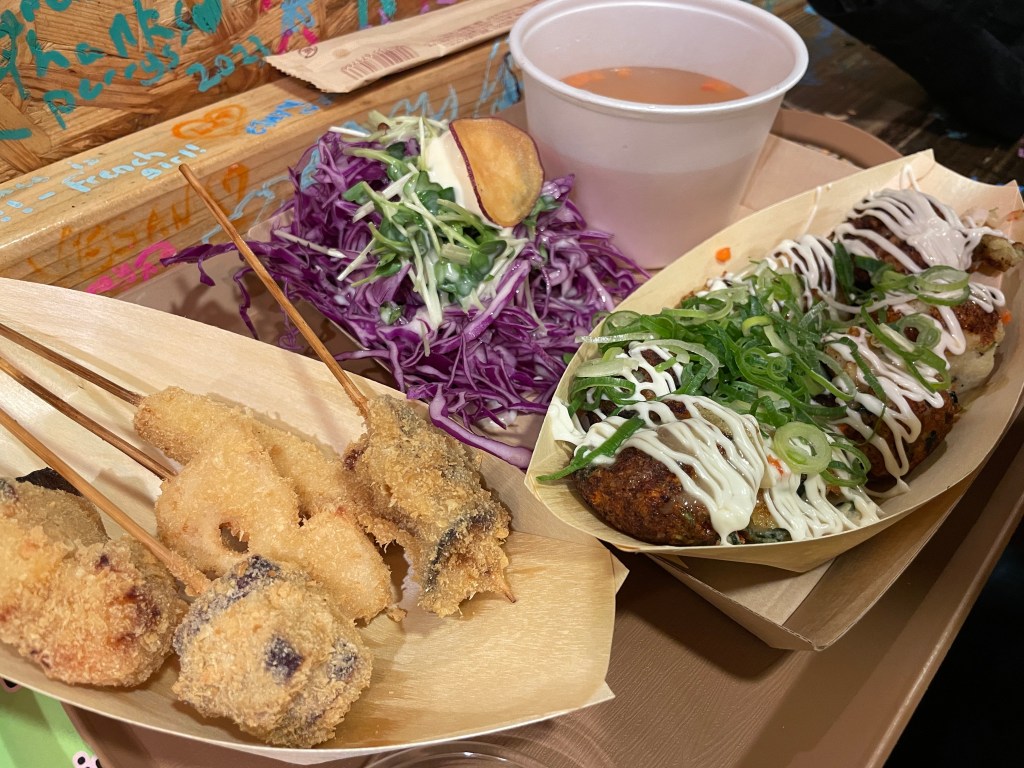
- Takoyaki – these are round bite-sized street food that is usually made with flour and eggs. At OKO Takoyaki, they have vegan and gluten-free takoyaki made with soy-bean flour.
- Kushikatsu – Grilled skewers, usually vegetables.
- Fruit Sandwiches – We never thought bread stuffed with fresh fruits and whipped cream would be so delicious! We are definitely going to make these at home. It is common to find them in convenience stores and cafes, especially in Kyoto. In Tokyo, there is a vegan fruit sandwich place called “Hatoya’s vegan fruit sandwich” in Asakusa very close to the Senso-ji temple gates (just off Nakamise Dori).
- Egg sandwich – Common convenience store item, also found in breakfast places like Komeda. Fancier egg sandwiches are available in cafe and coffee shops. Super tasty and super easy to find!
- Japanese pancakes – If you eat eggs, then Happy Pancakes ! If you are looking for a vegan option – Komeda Is (that’s a weird name, we know!) is an all-vegan variant of the regular Komeda, and they have a vegan version of the Japanese pancakes which is very tasty and hard to distinguish from its non-vegan counterpart except perhaps the height (the vegan one is slightly shorter than the egg-based ones)
- Onigiri – These are rice cakes and all convenience stores sell them. Not always vegetarian/vegan, its best to read labels using google translate if you care; pickled plum onigiri (umeboshi onigiri) at family mart is vegan!
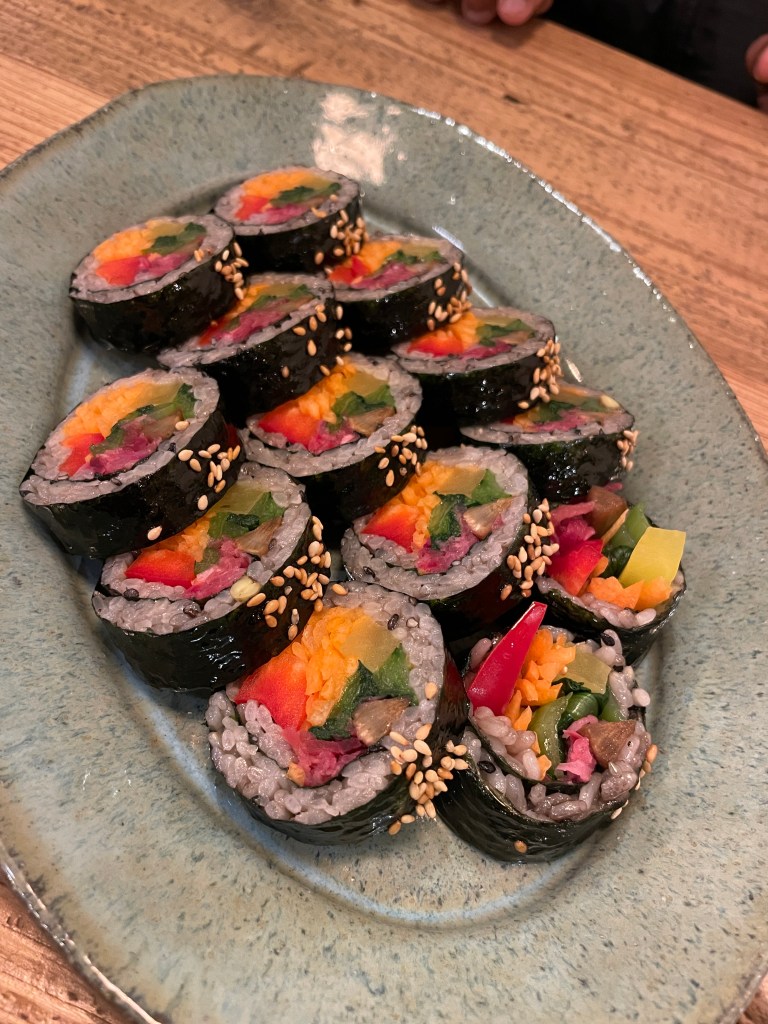
- Gimbap – If you feel like exploring the neighbors’ culinary dishes, the vegan gimbap (Korean variant of sushi) at Tu Casa is exceptional!
- Bombay sizzlers: On the rare occasion that you are craving Indian (that will likely not happen! ) or if you are late for dinner (may happen! it happened to us once), we highly recommend this place! The paneer and the kofta here were second to none! Though it is only one data point, we really think Indian restaurants in the US need to up their food game.












 BabuSoge
Leave a Reply