
Flying is a passion that takes dedication and a fair amount of money. Just getting a private pilot license (PPL) alone will set you back at least $15-20K, and that’s before you even think about renting aircraft afterward. So, it’s important to plan and budget carefully for this hobby. And remember, going into debt just to fly for fun isn’t a great idea. Now, let’s break down where all this money goes.
Aircraft rental is one of the biggest expenses when getting a PPL. Renting a plane typically costs between $120 and $180 per hour, depending on the type of aircraft and where you’re training. The FAA requires at least 40 flight hours for a PPL, but most people end up needing 50-60 hours. That means aircraft rental alone can cost you between $6,000 and $11,000.
Picking the right aircraft for training is important. Manufacturers like Cessna, Piper, Diamond, and Cirrus offer various options. Personally, I think it’s best to start in the cheapest aircraft available. Your initial training is all about learning the basics like instruments, landings, and communications, so there’s no need for a fancy, fast plane. Save that for after you get your license. It’s like learning to drive in a Honda instead of a Mercedes—you can rent the Mercedes later. I started with a Cessna 152, a small 2-seater that cost $125 per hour (fuel included). After a dozen lessons, though, I found it a bit unstable, so I switched to a Cessna 172, a more stable 4-seater at $155 per hour. This switch increased my costs, but the training went smoother. Also, don’t forget about taxes. The hourly rates don’t usually include taxes, and here in Minnesota, it’s almost 9%. So if you spend $10,000 on flying, expect to pay about $900 more in taxes. I forgot to budget for that, so don’t make the same mistake!
Instructor costs can vary depending on where you train. You might find independent instructors who charge a bit less. Generally, expect to pay between $50 and $100 per hour for instruction. With around 40-50 hours of instruction needed (30 required by the FAA), you’re looking at a total cost of $2,000 to $5,000. My flight school charged $85 per hour for an instructor.
Here’s a tip: you can save on instructor costs by studying hard on your own before your flight lessons. This way, you can focus your instructor time on flying, which is where you really want to develop your skills.
Ground school is super important for building a solid foundation in aviation. There are several options, but I used Sporty’s, which is highly recommended. I even got a small discount by purchasing Sporty’s through my flight school.
You can find a lot of resources on YouTube, but it takes time and effort to piece everything together. Sporty’s organizes everything for you, making it easier to study. That said, YouTube can still be a great resource. I followed Cindy Hollman’s lessons as part of my training.
Before you can take the FAA written test, you’ll need an endorsement. If you’re studying on your own, you’ll have to get this endorsement from an instructor, which will cost you money. But with Sporty’s, once you score 80% or higher on two of their FAA practice tests, they’ll give you the endorsement you need. Sporty’s offers unlimited practice tests, which is a huge benefit. Trust me, that’s a big deal. Free practice tests are hard to find online, so having this resource is really helpful.
Headset: You’ve got a lot of choices, from budget options to high-end models. Some people say start with a cheaper headset and upgrade later. Others think it’s worth splurging on a good one from the start. I’m in the latter camp.
For my first flights, I used a budget headset from the school. It worked, but the engine noise made it tough to hear my instructor. I spent so much energy just trying to listen that it affected my learning. Then I invested in a Bose A20 headset for $1,200, and it was a game changer! The active noise cancellation is amazing; it drowns out the engine noise and makes the radio crystal clear. There are other brands like Zulu and David Clark that offer similar features at lower prices, but if you can afford it, I highly recommend the Bose headset. It really improves the quality of your training.
Other gear for flying: An iPad is a popular tool in the cockpit nowadays. While it’s not a must-have, it makes flying easier. I bought an iPad 10 for $400, and it’s been worth every penny. You’ll also need a kneeboard to hold the iPad, which I got from Sporty’s for $40. Why get an iPad? The answer is ForeFlight, an app that’s a game changer. It does everything from checking weather and traffic to filing flight plans and looking at charts. It makes paper charts a thing of the past. For your checkride, you might still need to use paper charts, but in 2024, who uses paper charts anymore, right? ForeFlight offers three subscription tiers; I’m currently using the basic one for $10 a month. I’m still learning all the features, but I might upgrade later. Also, invest in a good pair of sunglasses—you’ll need them when flying into the sun. I use my Ray-Ban aviators, which I now keep just for flying.
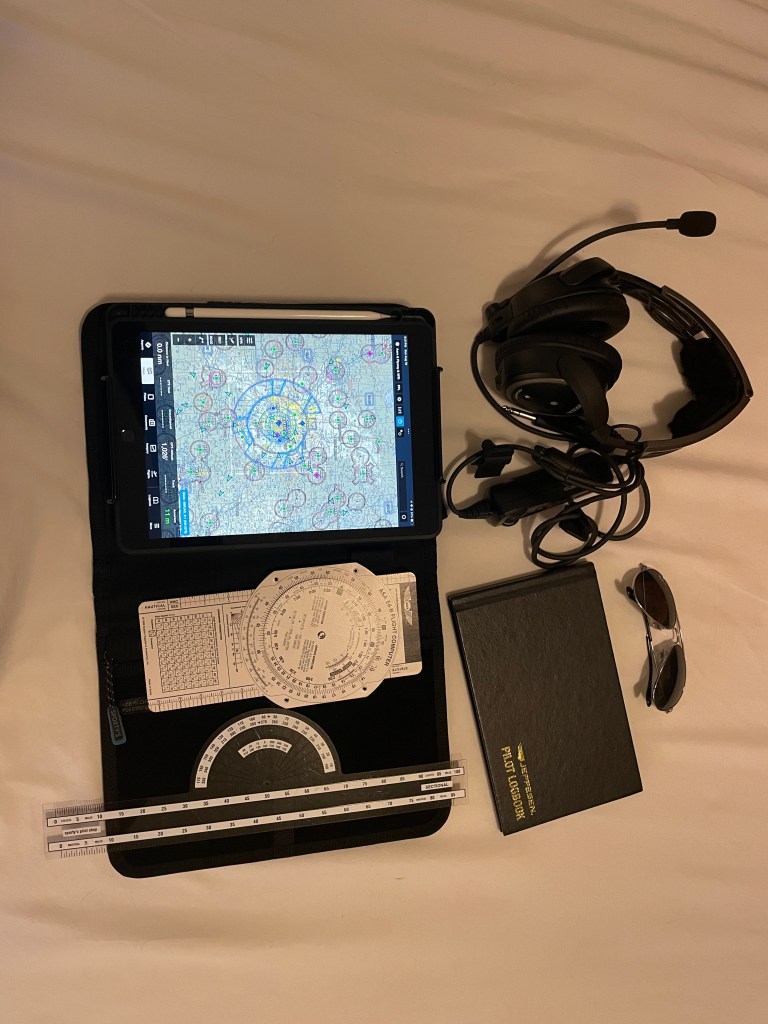

Miscellaneous: You’ll need to spend some extra money on a few other things. An E6B flight computer costs about $16, and a plotter for cross-country planning is around $7. These are things you’ll need for your checkride, but after that, you’ll probably rely on ForeFlight. Your instructor might suggest buying some books as well. I bought the FAR/AIM paid app for $10, which makes referencing regulations easy. You’ll also need a physical logbook for about $15. Even though ForeFlight can handle your logbook, having a hard copy is a good backup. Don’t forget the $150 for your medical certificate. If you’re a visa holder in the US, there are additional costs like a $130 TSA background check and $24 for fingerprints. I covered these extra steps for non-US citizens and non-permanent residents in a previous post.
Checkride/exam fee: To get your pilot’s license, you need to pass three tests: a written test, an oral test, and a practical (flying) test. The written test costs $175, and you need to score 70% or higher to pass. The higher your score, the less time the Designated Pilot Examiner (DPE) will spend grilling you during the oral portion of the practical exam. The practical exam (or check-ride) includes an oral and a flying portion, each taking about two hours. While most things in aviation are regulated, DPE fees are not. In my area, DPEs charge anywhere from $650 to $1,500. I went with a DPE who charged $1,050, which is on the higher end, but he has a reputation for being fair, so I felt it was worth it.
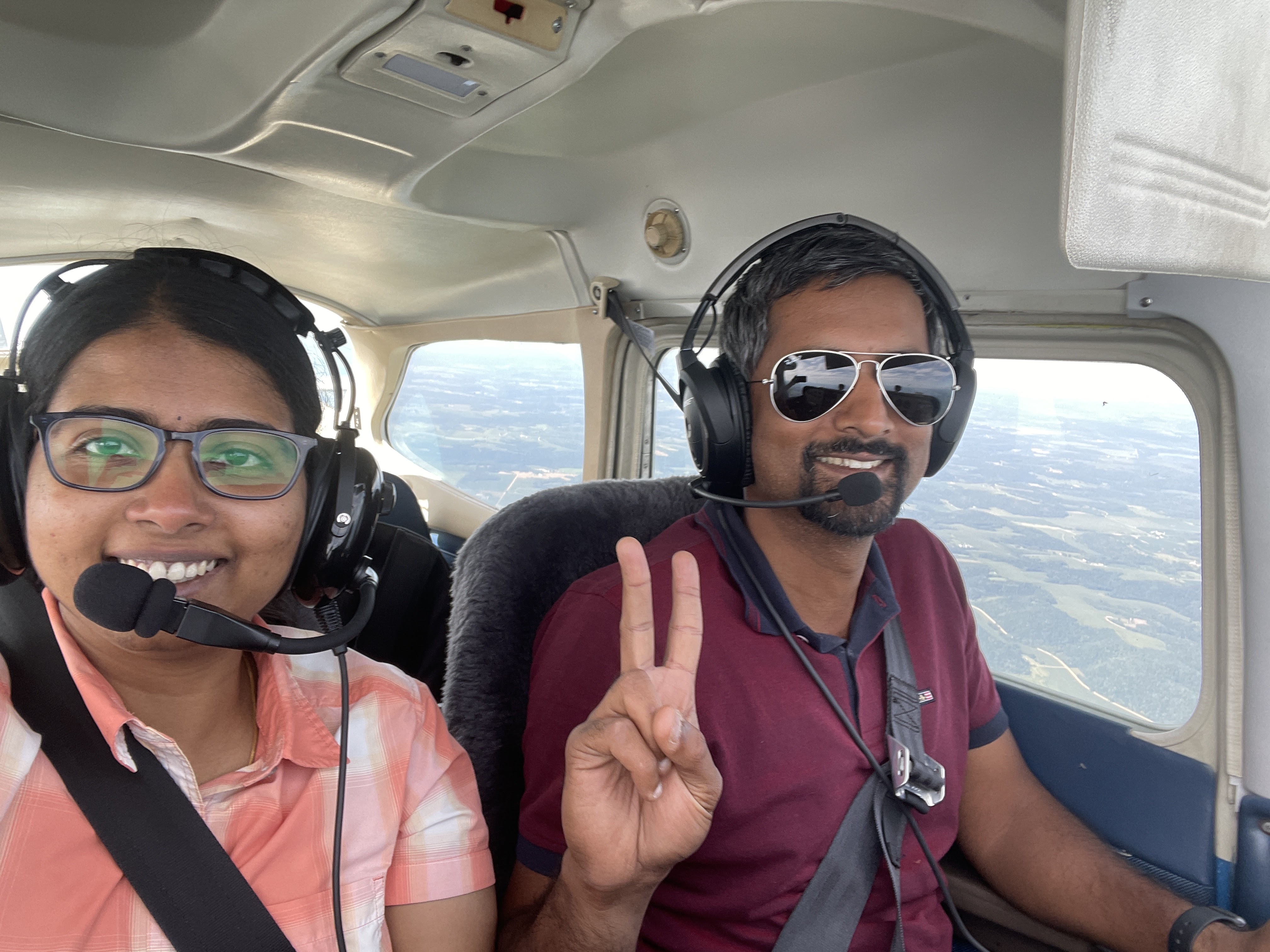
Final Thoughts: Flying is expensive, but it’s also incredibly fun and exciting, and even more so when you have a partner (or family) that is equally excited to be your passenger(s). Realistically, you’re looking at spending around $20,000. But don’t worry, you don’t have to shell out all $20K at once—it’s spread out over a year. I hope this breakdown helps you decide if you want to pursue your dream of flying.
 BabuSoge
Leave a Reply