
Growing up in South India, the only sourdough I was familiar with was the beloved idli/dosa batter, an essential part of our traditional breakfast routine. Aside from liking the subtly sour taste, the only other thing I knew was that making idli/dosa batter involved fermenting – something my mother often worried about especially when she forgot to grind the batter in time for the beginning of the school week. The batter for idli and dosa is nearly the same, with many households using the same mixture to make idli first and then transforming the leftover batter into dosa. Dosa tastes better as the batter becomes more sour, whereas idli is best made with a mildly sour batter.
It wasn’t until I moved to the United States that I encountered a second type of sour dough—sourdough bread that many are familiar with. My good friend from grad school who has been carrying around his starter everywhere, from San Diego to the Alps, taught me a sourdough bread recipe so fool-proof that within a couple of tries, I was producing fairly tasty bread (by no means as good as what he made), and I became hooked.
Recently, I’ve spent some time understanding fermentation in sour dough via some fantastic research papers on this subject, as well as the uniqueness and the commonality of this process in the two sour doughs. This article is a summary (and a culmination) of some of the things I’ve read and learned. Given that I am not a biologist and have no formal background in this area, I have kept the discussion mildly technical. This way, if I revisit this topic in the future, I will still be able to understand it without needing to backfill myself with more information.
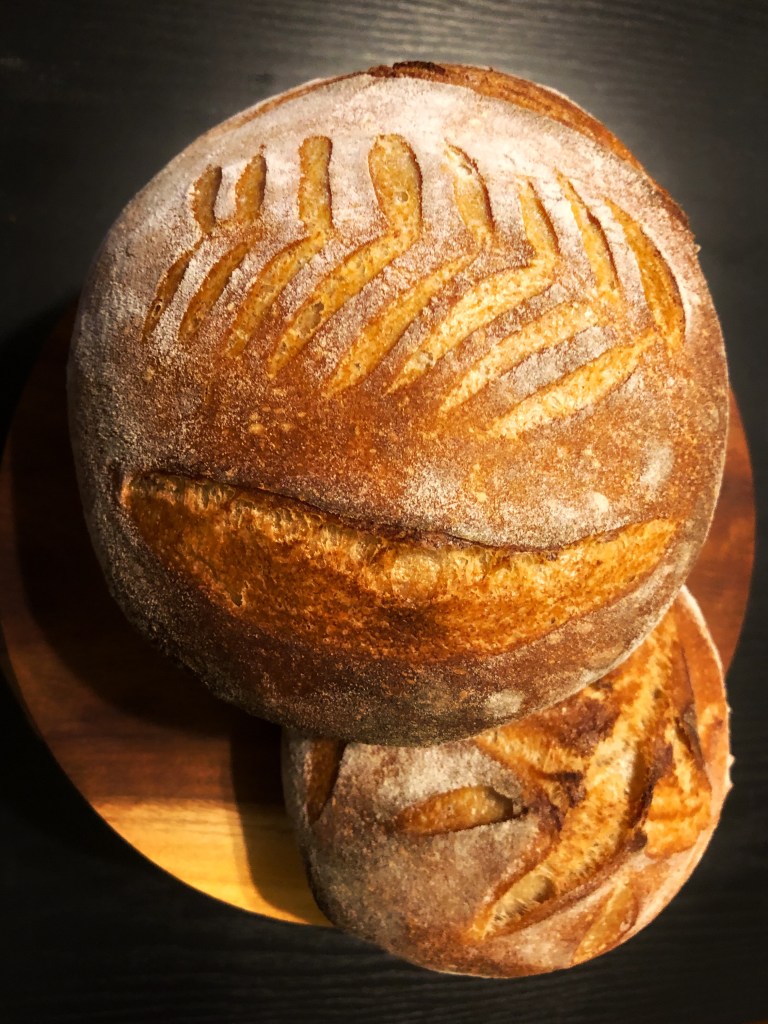
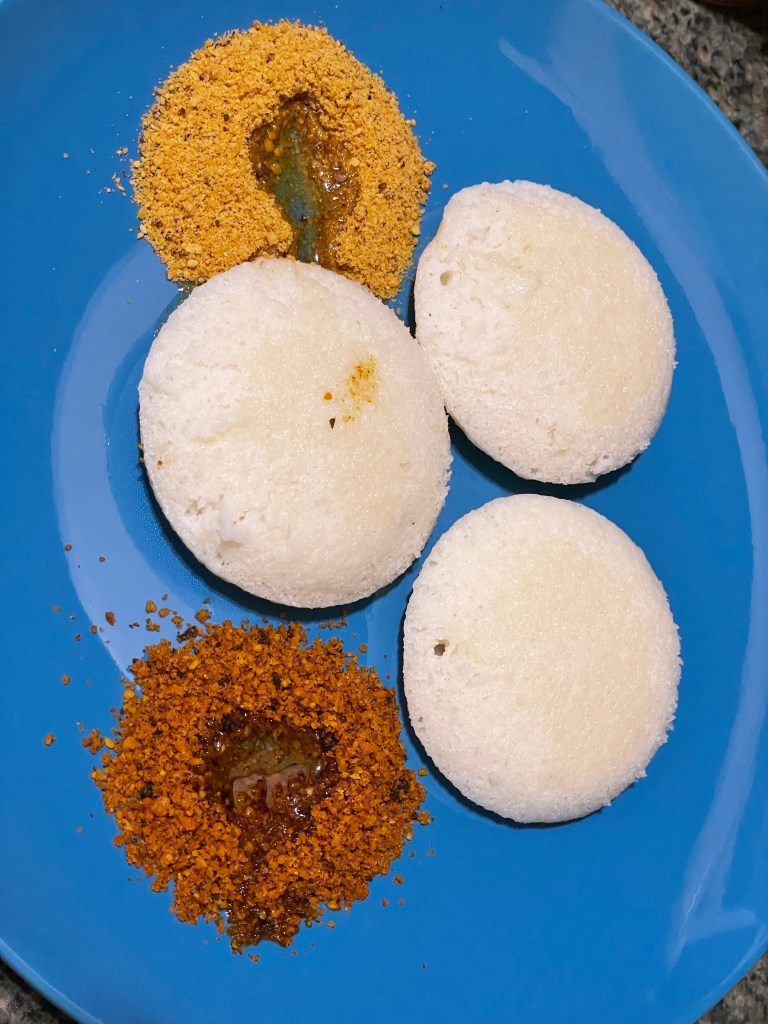

Fermentation
A metabolic pathway is a series of chemical reactions occurring inside every living cell that convert a substrate (the starting entity or chemical) into an end product. When complex molecules are broken down into simpler ones, energy is released that powers the cell to carry out its functions such as grow, and multiply. The breakdown of sugars (glucose, fructose, maltose, etc.) occurs via two main types of pathways – aerobic ( in the presence of Oxygen) and anaerobic ( in the absence of oxygen). Humans use the aerobic pathway predominantly and this is also known as respiration/Krebs cycle/Tri carboxylic acid (TCA) cycle. During intense exercise (reduced Oxygen), humans utilize the anaerobic pathway, leading to muscle cramping due to lactic acid buildup. Not all microbes have the capability to carry out aerobic respiration, some simple microbes can only perform anerobic respiration. Microbes that have the capability to use oxygen prefer to use the aerobic pathway since it produces more energy than anaerobic pathways. However, either in the absence of oxygen or an incapability to use oxygen, sugar breakdown takes place via a process known as fermentation and leads to the production of lactic acid.
Yeasts are in general aerobic but in a dough there is very little oxygen and any small amount that is present is used up during the initial stages of the process. For the most part, the yeast metabolizes sugars in a dough via the anaerobic fermentation. Depending on the raw materials, there are also a wide range of anaerobic bacteria in the dough, the most notable among them are a group of bacteria known as Lactobacillaceae or Lactic Acid Bacteria (LAB).
Lactobacillaceae can be classified into types based on the sugars that they can act upon. Homofermentative LAB can only metabolize 6-carbon sugars (such as glucose) and release lactic acid as the end product. Heterofermentative LAB can act on both 6-carbon and 5-carbon sugars. They anaerobically metabolize 5-carbon sugars to lactic acid and 6-carbon sugars are first modified to 5-carbon sugars by kicking out one of the carbon atoms in the form of CO2. The heterofermentative LAB thus metabolize 6-carbon sugars but they do so in a different pathway compared to the homofermentative LAB. Notably, the Heterofermentative LAB release during fermentation of 6-carbon sugars whereas homofermentative LAB do not. There is also a third kind known as facultative heterofermentative LAB that can metabolize the 5-carbon sugars like the heterofermentative LAB and the 6-carbon sugar in a way similar to homofermentative LAB.
Idli
Microbial population
In an idli/dosa – the urad dal (either with its skin intact or removed), is the main source of LAB. The rice does not contain any LAB. There is also a smaller concentration of yeast (about 2-3 orders of magnitude smaller than the bacteria). The yeast is only believed to play a small role in the fermentation (in the final stages, if at all); the bulk of the leavening and acidification happens due to LAB. Since the 1960s, extensive research has been done to identify the primary LAB responsible for idli fermentation. Initial studies conducted several decades ago (1960s) pointed towards two primary types of bacteria Leuconostoc mesenteroides and Enterococcus faecalis as the primary LAB responsible for fermentation and Pediococcus cerevisiae were found in the final stages of fermentation. L.mesenteroides are heterofermentative LAB and are the primary gas (CO2) producing microbe responsible for the rise in the batter volume. The Enterococcus that take part in the later stages of fermentation is homofermentative and only produces lactic acid. A latest research study indicates it is likely that L. mesenteroides identified in the study from several decades ago may in fact have been misidentified and nucleotide sequencing reveals it to be a mix of species from the genus Weissella.
Important details in the fermentation of idli/dosa batter
Naming aside, both studies come to common and important conclusions in the fermentation of idli batter. The process of fermentation is a sequential process where in for the first few hours more than 19-20 different families of bacteria are present to begin with. Around the 6 hour mark, LAB bacteria start to dominate and particularly the Weissella /L.mesenteroides start growing significantly in numbers actively producing lactic acid and CO2. The volume of the batter also increases significantly during this time. In addition to CO2, the Weissella /L.mesenteroides produce dextran, which is a complex polymer of glucose and has a mesh like structure. The dextran produced by the microbe stabilizes the batter and ensures that the CO2 produced stays trapped within the batter. This is very crucial for idli/dosa batter because unlike bread (discussed below), the idli/dosa batter doesn’t have gluten to trap the CO2 produced during fermentation. The lactic acid causes the pH of the batter to drop to around ~5. Around the 12 hour mark, there is a growth in Enterococcus and the pH drops to around 4.6. After the 15/16 hour mark, there is a noticeable increase in lactic acid production perhaps from the Pediococcus and pH is ~4.2. Henceforth, lactic acid fermentation makes the batter too acidic and generally unfit for use. The general timelines for fermentation at 70F are around 12-15 hrs.
To summarize – fermentation in idli is a sequential process that starts out with around 19-20 different families of bacteria but is ultimately dominated by the LAB – L.mesenteroides, Enterococcus, and Pediococcus. CO2 is primarily produced by the heterofermentative L.mesenteroides . The production of dextran is very important as it stabilizes the CO2 produced during fermentation and traps it in the dough.
Sourdough Bread
In the context of bread, sourdough is a mixture of flour and water that is fermented with lactic acid bacteria (LAB)in-tandem with the fermentation activity of the yeast.
Microbial composition
Bread has a higher concentration of yeast in the flour than the urad dal used in idli/dosa; flour also has LAB. As a result, the fermentation in bread is due to the action of yeast as well as LAB. The yeast ferment sugars by a process similar to homofermentative LAB but differ in the last step where they convert an intermediate called pyruvate into alcohol and CO2 instead of lactic acid as in the case of the homofermentative LAB. The rise in a bread dough comes substantially from the yeast and the sour flavor development is a function of the activity of yeast and LAB. In a bread dough, depending on the region, the type of flour, etc. there are a vast number of LAB responsible for fermentation. However, unlike idli/dosa, sourdough bread doesn’t rely very much on the unpredictable variety of LAB in the flour; rather a starter (or a culture) that has often been kept going for several decades or years from a previous dough is used to inoculate a more targeted microbe population in the dough. The process of continuously keeping this starter colony of bacteria alive leads to a steady composition of microbial diversity.
Acetic acid production
One among several popular sourdough bread is the San Francisco sourdough which as a very characteristic tangy taste. This is a result of acetic acid production by LAB in addition to the usual lactic acid. The particular variant of LAB that is mainly responsible for the acetic acid production is a heterofermentative LAB called L. sanfranciscensis. This LAB has the ability to thrive in sync with the yeast by using the fructose produced by yeast during fermentation to convert hexoses. Unlike other heterofermentative bacteria, the L. sanfranciscensis does not like to metabolize pentoses. And even among 6-carbon sugars, it prefers to break down a polymer of glucose called maltose to produce acetic acid in addition to lactic acid. Acetic acid has a markedly sour taste compared to lactic acid. This results in a tangier bread, tasting similar to vinegar due to the acetic acid production instead of a yogurt-like taste which comes from lactic acid production. The unique action of L. sanfranciscensis allows other homo and heterofermentative bacteria in the dough to metabolize the glucose, and other 5-carbon sugars. A typically “good” sourdough is widely considered to have an 80% lactic acid and 20% acetic acid composition. However, to each their own and “good taste” is a subjective argument.
Gluten
Gluten is a protein present in cereals (wheat, rye, barley) that is activated and forms a cross-linked mesh like polymer when it comes in contact with water. The strength of this mesh can be developed by techniques such as kneading. This gluten network is primarily responsible for trapping the CO2 that is produced during fermentation by yeast and LAB. Since both yeast as well as heterofermentative LAB release CO2, the gluten structure needs to be strong and well-developed to trap all that CO2 and to hold the shape and structure of the bread when all the CO2 escapes during baking. The dextran in the idli batter serves a similar purpose but a big chunk of the CO2 produced during fermentation of the idli/dosa batter is lost when mixing the batter prior to steaming it. In the case of bread, the trapped air due to fermentation in the proofing phase is kept intact during baking thus requiring a strong mesh structure to preserve the shape of the bread and to prevent its collapse.
Summary
While idli/dosa batter and the sourdough bread look very dissimilar in their end products, the sour taste has a common origin in the form of a group of bacteria called LAB (lactic acid bacteria). Idli/Dosa is a sequential and a spontaneous fermentation that sees a sequential growth of different types of LAB based on the pH. On the other hand, sour dough relies on a starter/culture to inoculate a target variety of LAB that are responsible for fermentation. In both cases, the CO2 that is produced during fermentation is trapped and raises the volume of the batter. In the case of idli, this happens due to dextran, a substance produced by the LAB, whereas in a sourdough bread, gluten takes care of trapping CO2. At the end of the day, it is fascinating that a process so widely dissimilar yet having several commonalities were developed in different parts of the world.
While I talk about only idli/dosa and sourdough bread in this post, there are several examples of LAB fermented dishes that are consumed globally – yogurt, kimchi, several varieties of cheese, Injera to name a few!
References
- Mandhania MH, Paul D, Suryavanshi MV, Sharma L, Chowdhury S, Diwanay SS, Diwanay SS, Shouche YS, Patole MS. 2019. Diversity and Succession of Microbiota during Fermentation of the Traditional Indian Food Idli. Appl Environ Microbiol 85:e00368-19. https://doi.org/10.1128/AEM.00368-19
- Michael G. Gänzle, Nicoline Vermeulen, Rudi F. Vogel,Carbohydrate, peptide and lipid metabolism of lactic acid bacteria in sourdough,Food Microbiology,Volume 24, Issue 2,2007,Pages 128-138,ISSN 0740-0020, https://doi.org/10.1016/j.fm.2006.07.006.
- Role of lactic acid bacteria and yeasts in sourdough fermentation during breadmaking: Evaluation of postbiotic-like components and health benefits, Front. Microbiol., 07 September 2022, Sec. Food Microbiology, Volume 13 – 2022 | https://doi.org/10.3389/fmicb.2022.969460
- Role of Leuconostoc mesenteroides in Leavening the Batter of Idli, a Fermented Food of India1. S. K. Mukherjee, M. N. Albury, C. S. Pederson, A. G. Van Veen, and K. H. Steinkraus; Appl Microbiol. 1965 Mar; 13(2): 227–231.
- Luc De Vuyst, Patricia Neysens, The sourdough microflora: biodiversity and metabolic interactions, Trends in Food Science & Technology, Volume 16, Issues 1–3,2005,Pages 43-56,ISSN 0924-2244, https://doi.org/10.1016/j.tifs.2004.02.012.
- De Vuyst, L., & Vancanneyt, M. (2007). Biodiversity and identification of sourdough lactic acid bacteria. Food Microbiology, 24(2), 120–127. doi:10.1016/j.fm.2006.07.005
- Nieminen, T.T., Säde, E., Endo, A., Johansson, P., Björkroth, J. (2014). The Family Leuconostocaceae . In: Rosenberg, E., DeLong, E.F., Lory, S., Stackebrandt, E., Thompson, F. (eds) The Prokaryotes. Springer, Berlin, Heidelberg. https://doi.org/10.1007/978-3-642-30120-9_208
- Gänzle, Michael G., Michaela Ehmann, and Walter P. Hammes. 1998. Modeling of growth of Lactobacillus sanfranciscensis and Candida milleri in response to process parameters of sourdough fermentation. Applied and Environmental Microbiology 64:2616-2623.
 BabuSoge
Leave a Reply